Vista Normal

Hay nuevos artículos disponibles. Pincha para refrescar la página.
Ayer — 4 Mayo 2026Salida Principal

Hackaday Links: May 3, 2026

Por: Tom Nardi
3 Mayo 2026 at 23:00
Hackaday Links Column Banner

Software that collects public data from the Internet and uses it to provide half-assed answers to your questions might seem like a modern craze, but today we bid farewell to a website that helped pioneer pretend conversations all the way back in 1997 — as of May 1st, Ask Jeeves is no more.

Well, technically they dropped the “Jeeves” part back in 2006. Since then it’s just been Ask.com, but as the name implies the idea was more or less the same. Rather than the relatively rigid parameters and keywords required by traditional search engines, you could ask Jeeves questions about the world using natural language. Early advertisements showed the virtual valet answering arbitrary questions like “How many calories in a banana?,” which of course today seems commonplace and utterly unimpressive, but was a pretty wild for the 1990s.

It might seem surprising that a site designed from day one to offer a human-like Q&A experience should fold right as such technology is becoming commonplace. But of course, that commonality is the problem. When Google can answer your questions just as well (or poorly…) as Jeeves or anyone else, what’s the benefit for the average Internet user to seek out another service? But it’s still somewhat ironic, which is probably why the farewell message on Ask.com ends with the line “Jeeves’ spirit endures.”

Gone but never forgotten.

While on the subject of technology that’s potentially ahead of its time, MacRumors is reporting that Apple is giving up on their Vision Pro augmented reality googles. They haven’t been formally discontinued as of yet, but sources indicate that the internal development team for the entire product line has been disbanded and reassigned to other projects within the company. This comes after a October 2025 refresh of the hardware still failed to connect with consumers. Insiders have said that not only were sales sluggish on the ~$3,500 headsets, but that they were getting returned at a far higher rate than any of Apple’s other hardware products.

Now, we’re hardly Apple apologists here at Hackaday. It sort of goes without saying that the whole “Walled Garden” thing doesn’t really fit our ethos. But we can’t deny that the Vision Pro is an impressive piece of technology. After years of sticking our phones in crappy plastic headsets, or trying to force hardware designed for VR gaming to do literally anything else, the Vision Pro offered a practical way to put augmented reality to work. But even for a company known for producing expensive hardware, the price tag was just too much for most consumers.

We’ll go out on a limb here and predict that the Vision Pro will one day be looked back on like the Newton — a product that was too expensive and niche to be a commercial success when it came out, but still a technical milestone that gave us a glimpse into the shape of things to come.

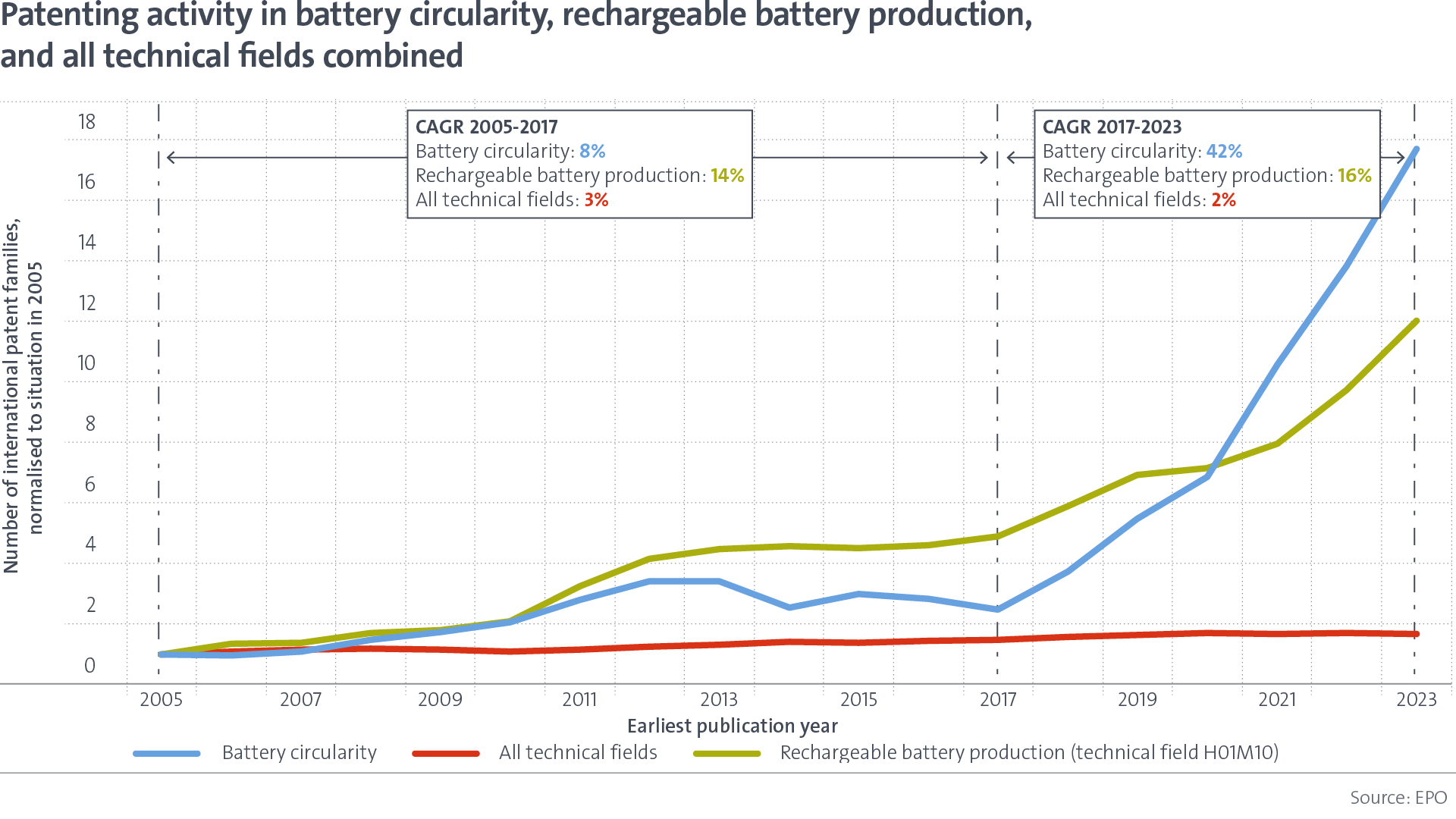
Speaking of a technology that will inevitably become more common, the European Patent Office (EPO) released a report this week showing a seven-fold increase in the number of inventions intended for battery reuse and recycling over the last decade. Given our insatiable demand for rechargeable batteries, it should come as no surprise that there’s a huge push for new methods of squeezing more use out of cells. As noted several times by the EPO, it’s not purely about saving money either. Even if Europe produces the batteries domestically, they need to import the raw materials. Relying on foreign countries to provide critical infrastructure can be precarious in the best of times, and is likely to only become more politically onerous in the future.
Finally, we’ll leave you with a fun way to waste some time on a Sunday evening: Visible Zorker. Created by Andrew Plotkin, this website allows you to not only play through all three installments of Zork, but presents a debugger-style view of the source code as the game is running. Even if you’re not terribly interested in seeing how your responses are parsed, the map that shows your progress through the world is certainly handy. The project was actually started back in 2025, but Andrew just completed the trilogy by adding support for Zork III a couple days ago so now is the perfect time to check it out.


See something interesting that you think would be a good fit for our weekly Links column? Drop us a line, we’d love to hear about it.


AnteayerSalida Principal

The GPS III Rollout is Almost Complete, But What is it?

Por: Tom Nardi
28 Abril 2026 at 14:00

Considering how integral it is to our modern way of life, you could be excused for thinking that the Global Positioning System (GPS) is a product of the smartphone era. But the first satellites actually came online back in 1978, although the system didn’t reach full operational status until April of 1995. While none of the active GPS satellites currently in orbit are quite that old, several of them were launched in the early 2000s — and despite a few tweaks and upgrades, their core technology isn’t far removed from their 1990s era predecessors.

But in the coming years, that’s finally going to change. Just last week, the tenth GPS III satellite was placed in orbit by a SpaceX Falcon 9 rocket. Once it’s properly configured and operational, it will join its peers to form the first complete “block” of third-generation GPS satellites. Over the next decade, as many as 22 revised GPS III satellites are slated to take their position over the Earth, eventually replacing all of the aging satellites that billions of people currently rely on.

So what new capabilities do these third-generation GPS satellites offer, and why has it taken so long to implement needed upgrades in such a critical system?

GPS Is Good, But Could Be Better

To understand the future of GPS, it’s helpful to look at its past. Developed by the United States military during the Cold War, what we now call GPS was originally known as Navigation System with Timing and Ranging (NAVSTAR). While the intent was always to allow civilian use of NAVSTAR, the equipment necessary to receive the signal and get a position was cumbersome and expensive.

There was little public interest in the system until Korean Air Lines Flight 007 was shot down in 1983 after mistakenly entering the Soviet Union’s airspace. With the lifesaving potential of NAVSTAR clearly evident, pressure started building on the industry to develop smaller and more affordable receivers — GPS as we know it was born.

NAVSTAR Satellite

That the development of such devices was possible in the first place was thanks to the design of NAVSTAR. Each satellite in the constellation broadcasts a timed radio signal which receivers on the ground use to compute their distance from the source. By comparing the signals from multiple satellites, a receiver can plot its position without the need for any local infrastructure. Since the process is entirely one-way, the can could be freely used by any device can can receive and decode the signal.

But while this operational simplicity was key to the proliferation of cheap ubiquitous GPS receivers, there’s certainly room for improvement given more modern technology. When NAVSTAR was designed knowing where a receiver was located within a radius of a few meters was more than sufficient, but today there’s a demand for greater accuracy by both civilian and military users. Given the essentially incalculable value of GPS to the global economy, improving reliability is also paramount. Not only has GPS jamming and spoofing become trivial, but even without the involvement of bad actors, legacy GPS struggles in urban environments.

Plans to deliver improved performance in these areas have been in the works for decades, with the United States Congress first authorizing the work on what would become GPS III all the way back in 2000. But when working on a system so critical that even a few minutes of downtime could put the entire planet into turmoil, such changes don’t come easy.

Can You Hear Me Now?

While modern GPS receivers are more sensitive than those in the past, there’s simply no getting over the fact that signals coming from a satellite more than 20,000 kilometers away will be by their very nature weak. So not only is it relatively easy for adverse environmental conditions to block or hinder the signal, but it doesn’t take much to override the signal with a local transmitter if somebody is looking to cause trouble.

As such, one of the key goals of the GPS III program was to deliver higher transmission power. This will lead to better reception for all GPS users across the board, but the new satellites also offer some special modes that offer even greater performance.

In addition to the backwards compatible signals transmitted by GPS III satellites, there’s also a new “Safety of Life” signal. This signal is transmitted at a different frequency, 1176 MHz, and at a higher power, so compatible receivers should hear it come in at approximately 3 dB above the “classic” signal. It’s intended primarily for high-performance applications such as aviation, but as compatible receivers get cheaper, it will start to show up in more devices.

These improvements should be enough for civilian use, but the military has higher expectations and operates under more challenging conditions. In such cases, future GPS III satellites will come equipped with a high-gain directional antenna that can project a “spot beam” signal anywhere on Earth. For receivers located within the beam, which is estimated to be a few hundred kilometers in diameter, the received signal from the satellite will be boosted by up to 20 dB. In contested environments, this should make it far more resistant to jamming and spoofing.

Speaking New Languages

The new signals being transmitted by GPS III satellites won’t just be louder than their predecessors, they’ll gain some new features as well.

For one thing, GPS III satellites will transmit a standardized signal known as L1C which offers interoperability with other global navigation systems such as Europe’s Galileo, China’s BeiDou, the Indian Regional Navigation Satellite System (IRNSS), and Japan’s Quasi-Zenith Satellite System. In theory a compatible receiver will be able to process signals from any combination of these systems simultaneously, improving overall performance.

The new satellites will also support the L2C signal. While this signal was technically available on earlier generation satellites, it’s still not considered fully operational and its adoption is expected to accelerate as more GPS III satellites come online. Compared with the legacy GPS protocol, L2C offers improved faster acquisition of signal, better error correction, and a more capable packet format.

To make GPS III transmissions even more secure, the military is also getting their own signal known as M-code. As you might expect, little is publicly known about M-code currently, but it’s a safe bet that it utilizes encryption and other features to make it more difficult for adversaries to create spoofed transmissions. For what it’s worth, a recent press release from the US Space Force claims that the use of M-code makes the next-generation GPS satellites “three-times more accurate and eight times more resistant to jamming than the previous constellation.”

Testing Out New Toys

Although all ten GPS III satellites are now in orbit, that doesn’t mean the constellation is complete. Starting in 2027, a new fleet of revised satellites known as GPS IIIF will start launching. They will take the lessons learned from the initial GPS III deployment to create a smaller, lighter, and more efficient platform that should have a service life of at least 15 years.

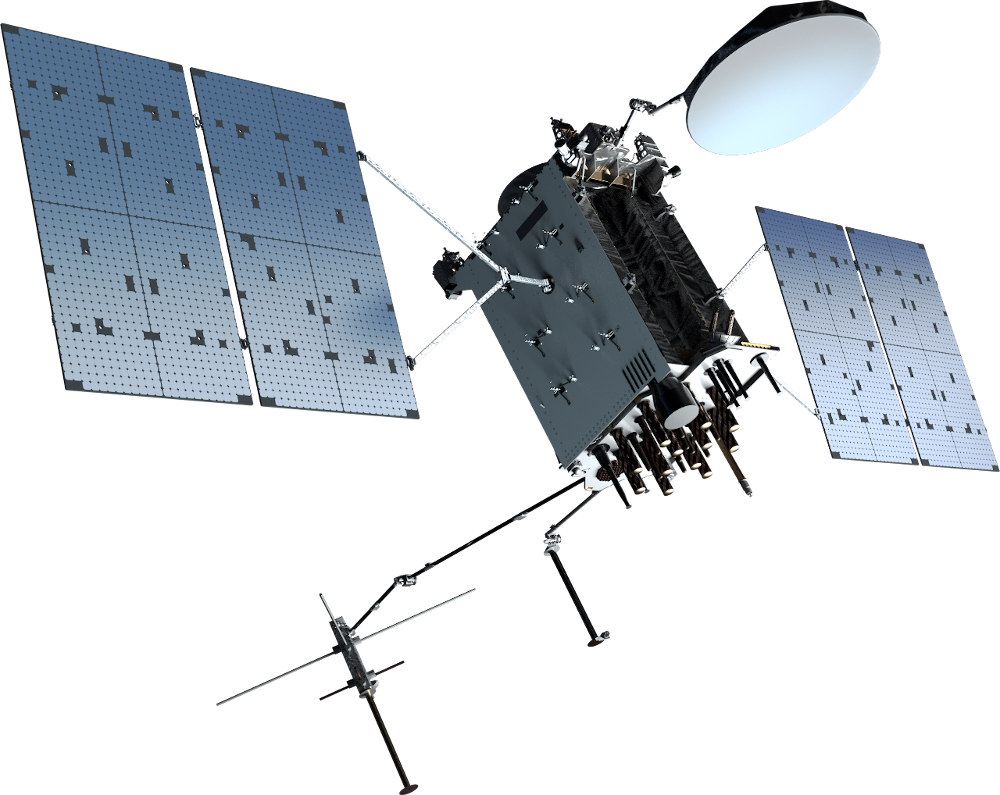
Artist impression of a future GPS IIIF satellite.

They’ll also include new in-development equipment that wasn’t quite ready for deployment when the current GPS III satellites were being assembled. This includes optical reflectors that will allow ground stations to more accurately track the position of each satellite, laser data links that will allow high-speed communication between satellites, and an improved atomic clock known as the Digital Rubidium Atomic Frequency Standard (DRAFS).

Of course, the vast majority of the people who use GPS every day will never be aware of all the changes and improvements happening behind the scenes. When they get a new phone with a GPS III-compatible receiver, they may notice that their navigation app locks on a bit faster or that the position shown on the screen is a little closer to where they are actually standing, but only if they are particularly attentive. But that’s entirely by design — the most important aspect of implementing GPS III is making the whole process as invisible as possible.

Hackaday Links: April 26, 2026

Por: Tom Nardi
27 Abril 2026 at 02:00
Hackaday Links Column Banner

It’s been three weeks since the Artemis II crew returned to Earth, and while the mission might be over for Reid Wiseman, Victor Glover, Christina Hammock Koch, and Jeremy Hansen, the work is only just beginning for engineers back at NASA. In a blog post earlier this week, the space agency went over the preliminary post-mission assessments of the spacecraft and its ground support equipment, and detailed some of the work that’s currently taking place as preparations begin for Artemis III.

During Artemis I, higher than expected damage was noted on both the Orion’s heat shield and the Space Launch System (SLS) launch pad. But according to NASA, the changes implemented after that first mission seem to have prevented similar issues this time around. The post also explains that reusable components of the Orion spacecraft, such as the avionics and the crew seats, are already in the process of being removed from Integrity so they can be installed in the next capsule on the production line.

While watching the live stream of the Artemis mission is the closest most of us will ever get to experiencing spaceflight, that doesn’t mean you can’t explore the solar system from the comfort of your own home — or more specifically, your browser. [Sani Huttunen] has created an incredible web-based solar system simulator that lets you explore our celestial neighborhood throughout different periods of time. You can tour the moons of Jupiter, see how the planets aligned on the date of your birth, and even check in on the Voyager probes. There are some very valid reasons to be skeptical about software moving to the web, but we’ve got to admit, this is a very slick demonstration of just how far modern browsers have come.

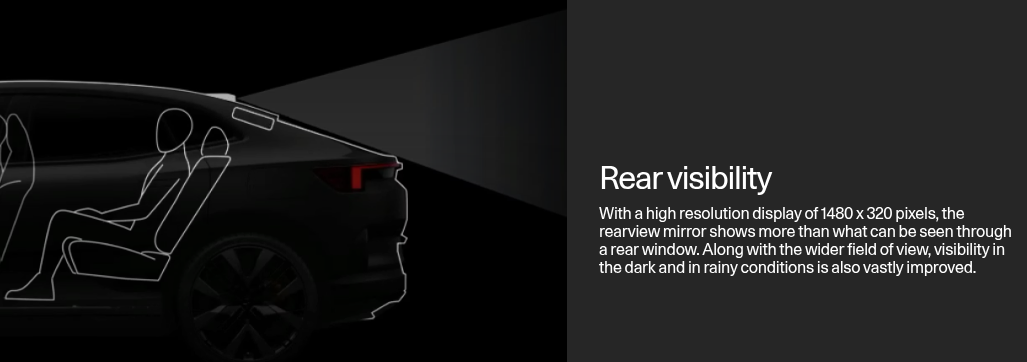
Speaking of how far things have come, are you ready for a car without a rear window? Polestar certainly hopes so, as their latest model does away with such quaint concepts. The glass panel in the roof ends right around the back headrests, and while the rear of the vehicle does open up for storage, the hatch is completely solid. In place of the traditional mirror, there’s a “high resolution” 1480 x 320 display that shows the feed from a rear-mounted camera.

No, that’s not a typo. At a time when smartphones are shipping with 2K displays, should the driver want to see what’s going on behind their $70,000+ USD electric vehicle, they’re limited to seeing it at a vertical resolution below that of VGA. We’d make a joke about Polestar offering up a “Rearview+” upgrade down the line that would give the driver a higher resolution view, but honestly, it’s getting a little too close to reality to be funny.

If that last one has you wishing for a reminder of simpler times, how about some new software for using the iconic Wii Remote as an input device? The Wii and its revolutionary controllers may be turning 20 later this year, but that hasn’t stopped the dedicated fans. This new wrapper provides accelerometer calibration, infrared tracking, and the ability to remap the Wii Remote’s buttons and create key combos. If you do something cool with it, we’d love to hear about it.

Finally, on the other end of the input spectrum, some details leaked out this weekend about Valve’s upcoming Steam controller — namely, the fact that it will cost players $99 at release. As reported by VICE, a hands-on review of the controller by TechyTalk was accidentally published early on YouTube, providing the public with pricing info ahead of an official announcement.

At first blush, this might seem like a lot of money to pay for a game controller, but it’s actually within striking distance of the sticker price on the standard controllers on the Xbox and PlayStation consoles. Perhaps more critically, it’s around half the price of the official “premium” controller offerings available for the aforementioned systems. Is it really any wonder that we’ve got cars without rearview mirrors when folks are putting down 200 bucks for a fancy PlayStation controller?


See something interesting that you think would be a good fit for our weekly Links column? Drop us a line, we’d love to hear about it.

VCF East and Maker Faire Make For a Busy Weekend

Por: Tom Nardi
23 Abril 2026 at 14:00

For those of us with an interest in hacking and making, events where we can meet up with like minded folks and check out the projects they’re working on don’t exactly happen every day. Unless you’re able to travel around the country (or even better, the world), you usually have to make do with the handful of annual events that are within a reasonable distance of your home. If you’re lucky that may give you two or three opportunities during the year to look forward to, generally spaced out enough that you’ve got adequate time to prepare ahead of the event and decompress afterwards.

But occasionally, the planets and geekdoms align. Such was the case this past weekend in the Northeastern United States, with Vintage Computer Festival East and the Philadelphia Maker Faire taking place simultaneously. Both are established must-see events for their respective communities and cover roughly the same geographical area, so if you happened to have a foot in each camp, this presented quite a difficult decision.

That is unless you took the third option. As the Philly Maker Faire was on Sunday and VCF took place over the span of the whole weekend, there was a narrow path to attend both events. It wouldn’t be ideal, of course. For one thing it would mean speed running VCF East, and there was a couple hundred miles of travel to contend with. We won’t even talk about the physical toll incurred — while there doesn’t appear to be any official dosage recommendation from the Surgeon General, surely this level of exposure to non-conforming technologists carries with it some risks.

But sometimes such sacrifices must be made, especially if you’re being paid to make them. So I packed up twice the normal number of Wrencher stickers, and hit the road in an effort to deliver a condensed version of my experience at these two fantastic events.

Vintage Computer Festival

Regular Hackaday readers may know that we’ve been covering VCF East for several years now, and seeing its growth first-hand during that time has been absolutely staggering. The event has gone from taking up a couple rooms in the sprawling InfoAge Science & History Museum complex to being distributed among several different buildings on the campus. This year it seemed like exhibitors were packed into every available space within the former Camp Evans Army research base, and even with the signs dotted around, navigating the show took a bit of effort.

For those looking to add some new toys to their collection, the consignment area has also been expanded considerably. What was once just a few folding tables covered with dusty old hardware has now turned into a major component of the show that takes up nearly as much floor space as the exhibits. But fair warning, in many cases the price tags have grown as well. While there were still deals to be had, some items were sporting labels with four figures on them.

Given the size of InfoAge, I wouldn’t have thought it possible for VCF to outgrow the venue, but part of me thinks they’re getting very close. Although more buildings on the campus are being renovated and opened to the public each year, there’s still a limit to how much the organizers will be able to pack into the available space. Moving some of the exhibits outdoors would help, but of course that introduces its own problems. Renting some tents would be easy enough, but it wouldn’t be much of a computer festival if exhibitors couldn’t power up their machines.

But even in the unlikely event that it stops growing, I can tell you with absolute certainty that one day simply isn’t enough time to see everything VCF East has to offer. Even if you don’t mind skipping all of the talks and don’t want to buy anything, there’s just not enough time to actually give all the exhibits the attention they deserve, especially if it’s your first time.

Philly Maker Faire

Although it hasn’t grown to the scale of VCF East, the Philadelphia Maker Faire has also been getting bigger and better with each passing year. The venue was once again the Cherry Street Pier, although this year some of the exhibits had to be moved outside in order to fit them all. The weather wasn’t ideal, but the organizers thought ahead — there were umbrellas available for use, and most of the outdoor activities were at least under some form of cover.

Compared to VCF, the Maker Faire attracts individuals with a wider array of interests. There was no shortage of high-tech hardware on display, including a lively combat robotics competition that ran throughout the day, but it was joined by artistic projects and local food vendors. There were attractions for attendees of all ages, with several activities specifically put together for young children. Where else can you fly a kite, drive a scale model of the Curiosity Mars rover, and sample local honey all under the same roof? Although there were certainly a few children at VCF East, there’s no question that the Maker Faire was the more family-friendly of the two events.

Much of what I saw at the Faire was new, but naturally some of the exhibitors from last year returned. Brett Houser was back with his incredible Wasteworld Toys, and unsurprisingly there was a sizable crowd around the table for most of the day. The ChompSaw area was similarly busy, and representatives from local groups such as Hive76 and Philly Mesh were eager to share their obsessions.

Getting on the Same Page

Although the two events were very different, there was undeniably some overlap in the attendees. On Sunday I actually saw a number of individuals at the Maker Faire that I recognized from VCF a day earlier. While everyone I spoke to was happy they could swing the back-to-back shows, they also were a bit disappointed that it meant cutting their time at VCF short.

Of course, neither group intended to step on each other’s toes. It was a simple matter of discovery — by the time the organizers of the two events realized there was going to be a date conflict, things were already set in motion and there was no time to make adjustments. Now that the lines of communication are open between the two groups, they should be able to avoid similar problems going forward.

Moreover, there’s a desire by those involved to expand the cooperation between such events in the tri-state area.  Representatives from JawnCon, a growing Philadelphia hacker con that we’ve had the opportunity to follow these last few years, were in attendance at the Faire to raise awareness about their own event in October. The hacker and maker communities are stronger when they work together, and I’d love to see more of these crossovers in the future.

Hackaday Links: April 19, 2026

Por: Tom Nardi
19 Abril 2026 at 23:00
Hackaday Links Column Banner

We’ll start things off this week with a story that’s developing more than 25 billion kilometers from Earth — on Friday, NASA announced that the command had been sent to shut down Voyager 1’s Low-energy Charged Particles (LECP) instrument. As the power produced by the spacecraft’s aging radioisotope thermoelectric generator (RTG) continues to dwindle, engineers at the Jet Propulsion Laboratory have been systematically turning off various systems to extend the mission for as long as possible. It’s believed that deactivating LECP should buy them another year, during which engineers hope to implement a more ambitious power-saving routine. If this sounds a bit familiar, you’re probably thinking of Voyager 2. The plug was pulled on its LECP instrument back in March of 2025.

The JPL engineers hope that their new plan may allow them to reactivate previously disabled systems on the twin space probes, but even if everything goes according to plan, there’s no fighting the inevitable. At some point, there simply won’t be enough juice in the RTGs to keep the lights on. Although it’s going to be a sad day when we have to bring you that news, surviving a half-century in space is one hell of a run.

Speaking of ending a run, just a week after Amazon announced that pre-2012 Kindles would no longer be supported, the company is letting users know that the Kindle software for PCs will be discontinued in June. In its current form, at least. As Good e-Reader reports, Amazon is developing a new client for users who want to access the Kindle ecosystem from their computers, but it will only run on Windows 11. Since older software could be used to strip DRM from purchased ebooks, it seems likely this is another attempt to lock the platform down.

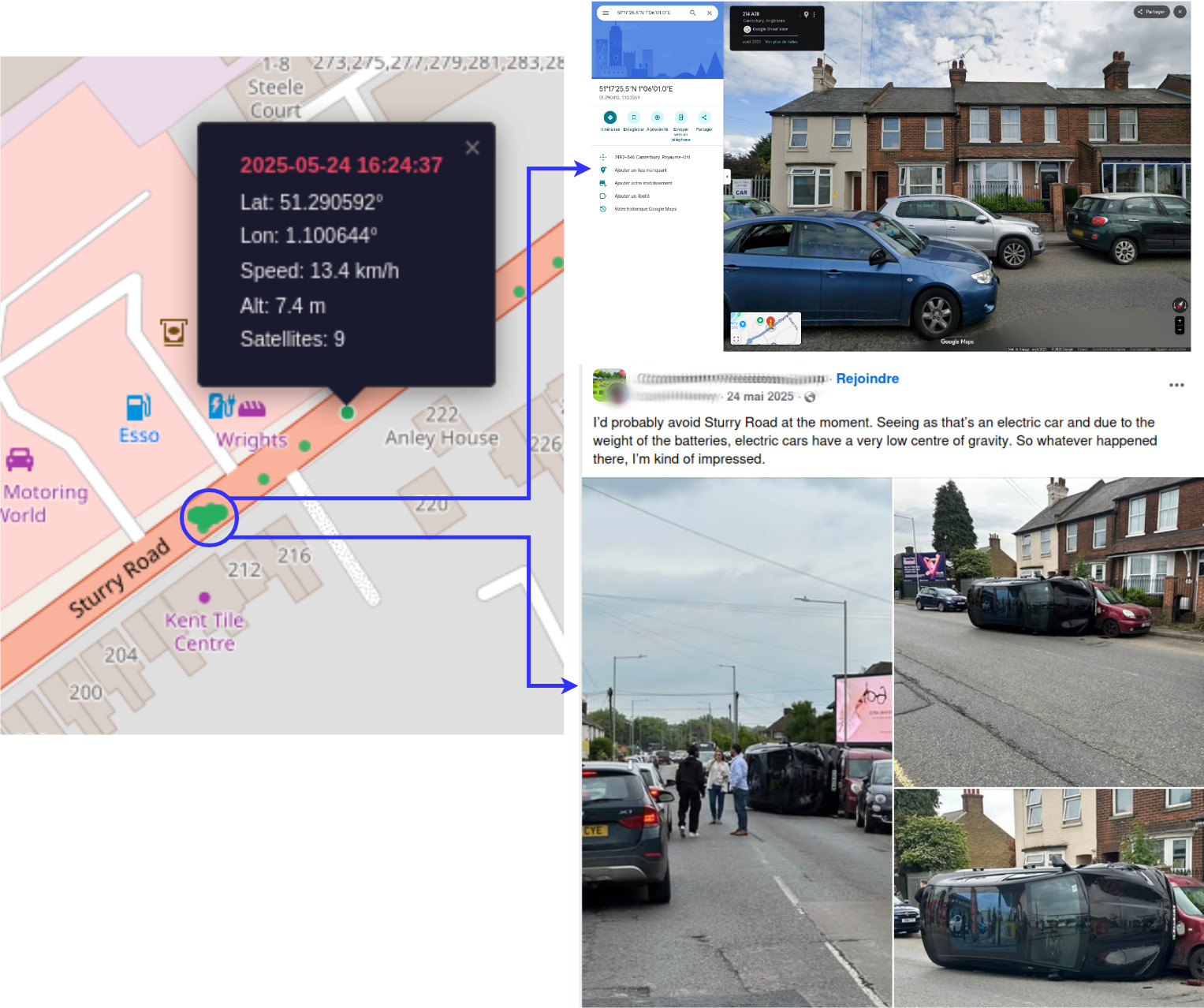
Because, of course, people post car crashes on Facebook.

We’re not fans of arbitrary limits being placed on ebooks and the devices that read them, but on the other hand, there are definitely systems out there that could stand to be tightened up a bit. For example, research out of Quarkslab has shown that the electronic control unit (ECU) from a wrecked vehicle can reveal a surprising amount of information.

After picking up a used ECU, they were able to dump its NAND flash chip and decode the log files it contained. It turns out the car had GPS logs going back to the day it rolled off the assembly line, and the researchers were able to reconstruct every trip it ever made.

By cross-referencing the last recorded coordinates with social media posts, they were even able to find pictures of the crash that took the vehicle out of commission. It’s bad enough that personal information can be scraped off of secondhand hard drives; now we’ve got to worry about what happens to our cars after they get hauled off to the junkyard.

If these are the sort of stories that keep you on two wheels rather than four, you may be interested in the latest innovation from Škoda Auto. In an effort to reduce collisions with pedestrians, they’ve developed a bike bell that penetrates active noise cancellation (ANC) systems. The logic goes like this: if someone is walking around with headphones that feature ANC, they might not hear the bell of an approaching bike. So they teamed up with researchers from the University of Salford to essentially find the weaknesses in existing ANC systems.

As you might have guessed, irregular noises are harder to block out than constant tones. Researchers uncovered a gap between 750 and 780 Hz where sounds could sneak through. The mechanical bell uses both principles to defeat ANC, and in testing, it was shown to provide headphone-wearing pedestrians  more time to react to an approaching bicycle.

Finally, we’ll bring this week’s post full circle by starting and ending on a space story: earlier this week, PBS released the hour-long documentary Artemis II: Return to the Moon on YouTube. Watching PBS programming on YouTube might seem a bit odd, but that’s the world we live in these days. At any rate, the video is a fascinating look into what went into the recently concluded Moon mission and has us even more excited for Artemis III and beyond.


See something interesting that you think would be a good fit for our weekly Links column? Drop us a line, we’d love to hear about it.
A Tale of Cheap Hard Drives and Expensive Lessons

Por: Tom Nardi
15 Abril 2026 at 14:00

When it comes to electronic gadgets, I’m a sucker for a good deal. If it’s got a circuit board on the inside and a low enough price tag on the outside, you can be pretty sure I’ll be taking it home with me. So a few years ago, when I saw USB external hard drives on the shelf of a national discount chain for just $10, I couldn’t resist picking one up. What I didn’t realize at the time however, was that I’d be getting more in the bargain than just some extra storage space.

It’s a story that I actually hadn’t thought of for some time — it only came to mind recently after reading about how the rising cost of computer components has pushed more users to the secondhand market than ever before. That makes the lessons from this experience, for both the buyer and the seller, particularly relevant.

What’s in the Box?

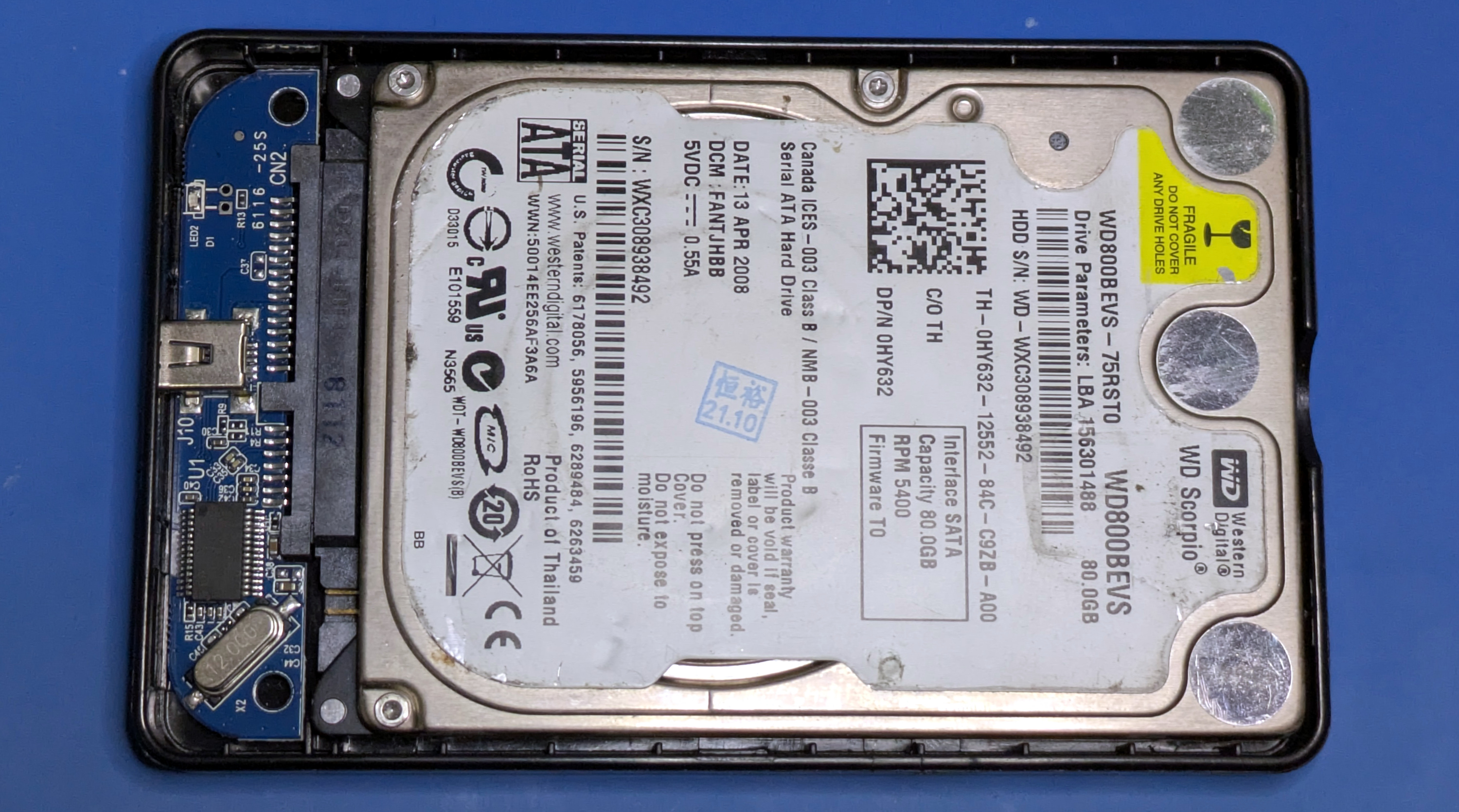
It wasn’t just the low price that attracted me to these hard drives, it was also the stated capacity. They were listed as 80 GB, which is an unusually low figure to see on a box in 2026. Obviously nobody is making 80 GB drives these days, so given the price, my first thought was that it would contain a jerry-rigged USB flash drive. But if that was the case, you would expect the capacity to be some power of two.

Upon opening up the case, what I found inside was somehow both surprising and incredibly obvious. The last thing I expected to see was an actual spinning hard drive, but only because I lacked the imagination of whoever put this product together. I was thinking in terms of newly manufactured, modern, hardware. Instead, this drive was nearly 20 years old, and must have been available for pennies on the dollar since they were presumably just collecting dust in a warehouse somewhere.

Or at least, that’s what I assumed. After all, surely nobody would have the audacity to take a take a bunch of ancient used hard drives and repackage them as new products…right?

Certified Pre-Owned

Once I saw that the drive inside the enclosure was older than both of my children, I got curious about its history. Especially given the scuff marks and dirt on the drive itself. A new old stock drive from 2008 is one thing, but if this drive actually had any time on the clock, that’s a very different story. Forget the implications of selling used merchandise as new — if the drive has seen significant use, even $10 is a steep price.

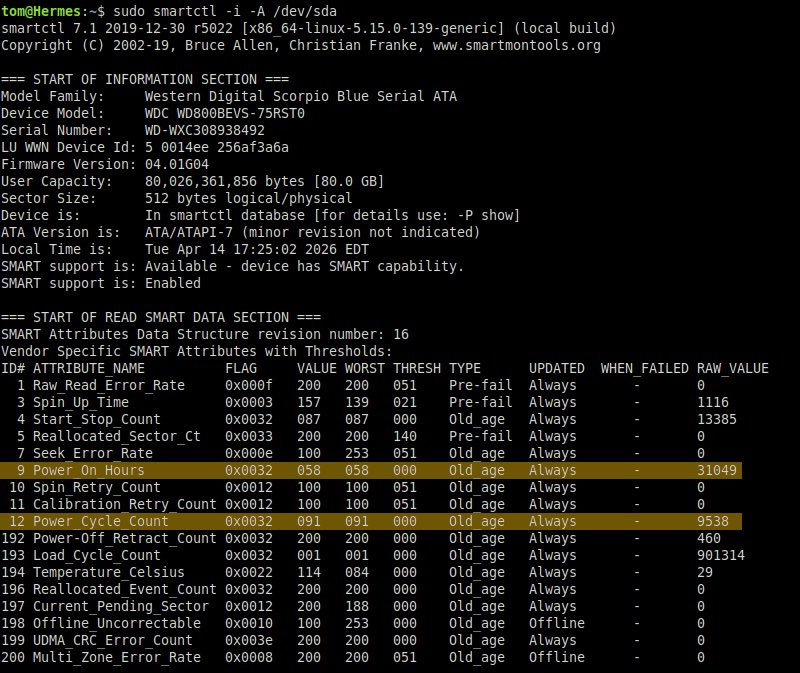
Fortunately, we can easily find out this information through Self-Monitoring, Analysis, and Reporting Technology (SMART). Using the smartctl tool, we can get a readout of all the drive’s SMART parameters and figure out what we’re dealing with:

Well, now we know why these things are so cheap. According to the SMART data, this particular drive has gone through 9,538 power cycles and accumulated a whopping 31,049 hours of total powered on time. I’ll save you the math, that’s a little over 3.5 years.

Note that all of the attributes are either Old_age or Pre-fail. The term “used” barely covers it, this drive has been beat to hell.

Buried Treasure

It’s a fair bet that anyone finding themselves regularly reading Hackaday possesses an inquisitive mind. So at his point, I’m willing to bet you’re wondering the same thing I did: if this drive has been used for years, could it still contain files from its previous life?

Obviously it was formatted before getting boxed up and put back on the shelf. But frankly, anyone who’s unscrupulous enough to pass off decades-old salvaged drives as new probably isn’t putting in the effort to make sure said drives are securely wiped.

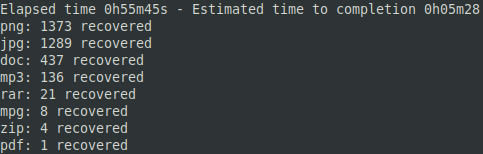
I was willing to bet that the drive went through nothing more than a standard quick format, and that even a simplistic attempt at file recovery would return some interesting results. As it so happens, “Simplistic Attempt” is basically my middle name, so I fired up PhotoRec and pointed it at our bargain drive.

It only took a few minutes before the file counters started jumping, proving that no effort was made to properly sanitize the drive before repackaging it. So not only is this drive old and used, but it still contains information from wherever it was for all those years. If it came from an individual’s personal computer, the information could be private in nature. If it was a business machine, the files may contain valuable proprietary data.

In this case, it looks to be a little of both. I didn’t spend a lot of time poring over the recovered files, but I spot checked enough of them to know that there’s somebody in China who probably wouldn’t be too happy to know their old hard drive ended up on the shelf in an American discount store.

For one thing we’ve got hundreds of personal photographs, ranging from vacation shots to formal portraits.

The pictures show fun in the sun, but the DOC and PDF files are all business. I won’t reveal the name of the company this individual worked for, but I found business proposals for various civil engineering projects within the Minhang District of Shanghai worth millions of dollars.

Once is Happenstance….

I know what you’re wondering, Dear Reader. If the first drive I pulled off the shelf happened to have a trove of personal and professional information on it, what are the chances that it would happen again? Perhaps it was a fluke, and the rest of the drives would be blank.

That’s an excellent question, and of course we can’t make a determination either way with only a single point of data. Which is why I went back the next day and bought three more drives.

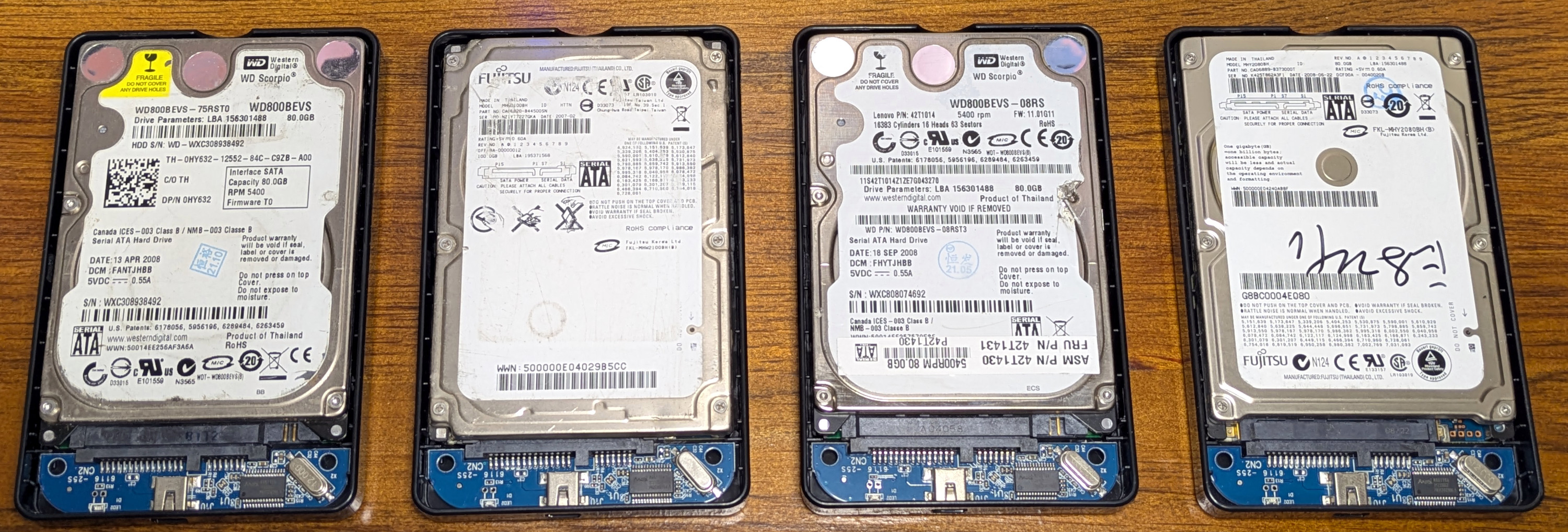
Right off the bat, it’s worth noting that no two drives are actually the same. Two are Western Digital and two are Fujitsu, but none of them have the same model number. The keen-eyed reader will also note that one of the drives is 100 GB, but it has been partitioned to 80 GB to match the others.

Three of the drives were manufactured in 2008, and one is from 2007. I won’t go through the SMART data for each one, but suffice it to say that each drive has several thousand hours on the clock. Although for what it’s worth, the first drive is the lifetime leader by far.

In terms of file recovery, each drive gave up several gigabytes worth of data. In addition to the one we’ve already looked at, two more were clearly the primary drives in Windows boxes, and each contained a mix of personal data and technical documents such as AutoCAD drawings, datasheets, bills of materials, and schematics. Given their contents, I would guess the drives came from off-lease computers that were used by engineering firms.

The fourth drive was different. It contained more than 32 GBs worth of Hollywood movies, the most recent of which was released in 2010. I imagine this drive came out of somebody’s media center. Now I haven’t sailed the high seas, as it were, since my teenage years, but even if I had wanted to add these titles to my ill-gotten trove of films, it was a non-starter. Given the time period they were downloaded in, most of them were below DVD resolution.

Plus, they were all dubbed in Chinese. Not exactly my idea of a movie night.

A Cautionary Tale

Admittedly, given that they were being sold in a home electronics chain-store, the likelihood that these drives would be purchased by somebody with the means to extract any meaningful data from them isn’t very high. But since you’re reading this, you know the chances clearly aren’t zero. I didn’t have any malicious intent, but the same can’t necessarily be said for others.

So what can we take away from this? To start with, if you’re planning on selling or giving away any of your old drives, make sure they are properly wiped. In the dusty past, the recommendation would have been to use the Linux-based Darik’s Boot and Nuke (DBAN) live CD, but the project was was acquired back in 2012 and development was halted a few years later. Luckily, the GPLv2 tool that DBAN actually ran against the drive was forked and is now available as nwipe.

But as mentioned earlier, I get the impression that these drives were from businesses that unloaded their old machines. In that case, the users can’t really be blamed, as they wouldn’t have been able to wipe the drives even if they knew ahead of time their work computers were getting swapped out. But they certainly could have made an effort to keep their personal data off of company property. It’s one thing to have some corporate secrets stolen down the line, but you don’t want pictures of your kids to be in the mix.

In short, nobody cares about what happens with your personal data more than you do, so make sure it doesn’t get away from you. Otherwise some bargain-hunting nerd might be pawing through it in a few years.

Hackaday Links: April 12, 2026

Por: Tom Nardi
12 Abril 2026 at 23:00
Hackaday Links Column Banner

At this point, we’ll assume you already know that four humans took a sightseeing trip around the Moon and made their triumphant return to Earth on Friday. Even if you somehow avoided hearing about it through mainstream channels, we kept a running account of the mission’s highlights stuck to the front page of the site for the ten days that the crew was in space.

On the assumption that you might be a bit burned out with space news at this point, we won’t bring up it up in this post… other than to point out that excitement for the lunar flyby has driven the number of simultaneous players of Kerbal Space Program to its highest count ever — nearly 20,000 armchair astronauts spent this weekend trying to cobble together their own rocket in honor of the Artemis II mission.

With so many folks focused on the Moon it would be the perfect time for a company to sneak out some bad news, which is perhaps why Amazon picked this week to announce they would be dropping support for Kindles released before 2012. Presumably there aren’t too many first and second generation Kindles still out there in the wild, but the 2012 cutoff does mean the first iteration of the Paperwhite will be one of the devices being put out to pasture come May 20th.

Amazon says the pre-2012 Kindles that are currently in user’s hands will still function, but they’ll no longer be able to purchase or download new books. The bigger issue is that you won’t be able to register these older devices after May. So if you have to factory reset your own Kindle, or want to buy one on the second hand market that’s already been wiped, you won’t be able to link it to your account to download books you’ve purchased.

Frankly, the idea that Amazon will no longer have their nose in these devices doesn’t bother us one bit. In fact, it sounds like an improvement over the status quo. If you own one of the device’s in question, now would be a fantastic time to download Calibre and start managing your own offline ebook library. In fact, even if your Kindle is new enough to not be affected by this change, you should still download it. Seriously, just use Calibre.

On the subject of software, an entry for XChat has recently popped up on Apple’s App Store. No, not that XChat. Instead of connecting to your favorite IRC server, the new mobile app will let you send messages to… whoever it is still actively using Twitter X. Confusingly, there’s also an XChat on the Google Play Store, but that appears to be a totally different thing altogether.

Finally, we’ve been seeing a lot of chatter online this weekend about France ditching Windows and switching over to Linux. While we applaud any mainstream push towards open source software, it’s worth digging into the details for this one. The directive says that the Interministerial Digital Directorate (DINUM) will be switching its desktop machines over to Linux, but that only represents a few hundred machines.

The experience gained during this roll-out will help shape a larger scale migration in the future, with the rest of the government asked to come up with a migration plan before the end of the year. When those other agencies, and the thousands of machines they use, will actually be penguin-powered is not clear. It’s possible they could come back and say a full migration would take a decade to complete.

So it’s certainly a step in the right direction, but it will likely be quite some time before any significant part of France’s infrastructure is divorced from the Redmond giant.


See something interesting that you think would be a good fit for our weekly Links column? Drop us a line, we’d love to hear about it.
Following Artemis II’s Journey Around the Moon

Por: Tom Nardi
1 Abril 2026 at 22:38

NASA is going back to the Moon! We’ll follow the crew of Artemis II every step of the way.

Day 1 – Liftoff!

After resolving a last-minute communications issue with the Flight Termination System (FTS), the Artemis II Space Launch System (SLS) rocket lifted off from Launch Complex 39B at NASA’s Kennedy Space Center in Florida at 6:35 PM EDT.

Main engine cutoff (MECO) for the SLS rocket occurred at 6:43 PM, placing the Orion spacecraft and crew members Reid Wiseman, Victor Glover, Christina Koch, and Jeremy Hansen safely into orbit around the Earth. Just before 7:00 PM, all four solar array “wings” were successfully deployed from the European Service Module.

The perigee and apogee raise maneuvers were completed as scheduled — two burns by the RL10 engine on the interim cryogenic propulsion stage (ICPS) lifted the Orion spacecraft to a higher orbit, and put it in position for the eventual trans-lunar injection (TLI) burn which will put the vehicle on course for the Moon.

Between the execution of these two maneuvers, audio and video communication with the Orion spacecraft was briefly lost. Mission Control was still able to receive the telemetry downlink from the vehicle during this period, and was able to determine the spacecraft was operating normally. The cause of the communication glitch is still being investigated, but according to statements from NASA Administrator Jared Isaacman during the post-launch press conference, engineers do not believe it to be a critical issue.

Day 1 – Proximity Operations Demo

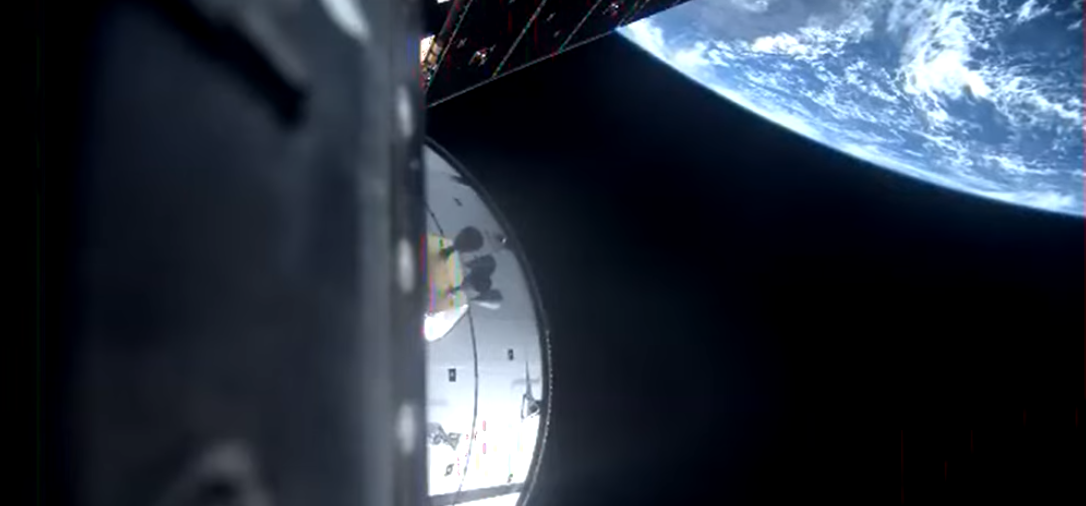
Following the separation of the ICPS, the Artemis II crew performed the Proximity Operations Demonstration.

Separation of the interim cryogenic propulsion stage from the European Service Module

Pilot Victor Glover took manual control of the Orion spacecraft, and performed a 180 degree turn to face the discarded ICPS. While flying the Orion, he told Mission Control that the vehicle’s real-world performance was better than in the simulator, and specifically commented on the accuracy of the controls and the clarity of the camera system.

The crew reported a rumbling sensation coming from the Service Module, and were advised by Mission Control that they were feeling expected thruster firings. They noted that crews on both the Soyuz and Dragon spacecraft have reported similar experiences.

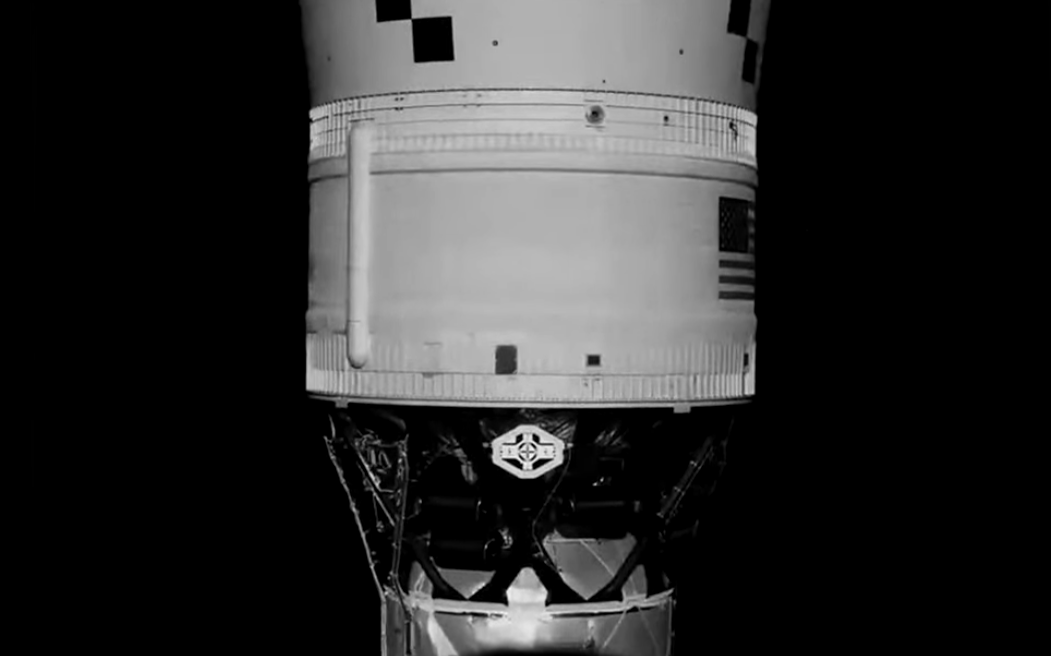
View of ICPS through Orion forward camera. Note the visual docking target.

Glover spent slightly more than an hour at the controls of the Orion spacecraft, before finally backing away from the spent ICPS and returning the vehicle to automatic control. Once the Orion was a safe distance away, the ICPS performed its own disposal burn which put it on target to reenter the Earth’s atmosphere over the Pacific Ocean.

Day 2 – Trans-Lunar Injection

After a rest period, the crew’s primary objective for day two of the mission will be to complete the trans-lunar injection burn. As the Orion will be flying on a free return trajectory, this burn simultaneously puts Orion on course for a rendezvous with the Moon on day five and also sets it up to come back to Earth on day ten.

NASA Live Streams

Hackaday Links: March 29, 2026

Por: Tom Nardi
29 Marzo 2026 at 23:00
Hackaday Links Column Banner

Whether it’s a new couch or a rare piece of hardware picked up on eBay, we all know what it feels like to eagerly await a delivery truck. But the CERN researchers involved in a delivery earlier this week weren’t transporting anyone’s Amazon Prime packages, they were hauling antimatter.

Moving antimatter, specifically antiprotons, via trucks might seem a bit ridiculous. But ultimately CERN wants to transfer samples between various European laboratories, and that means they need a practical and reliable way of getting the temperamental stuff from point A to B. To demonstrate this capability, the researchers loaded a truck with 92 antiprotons and drove it around for 30 minutes. Of course, you can’t just put antiprotons in a cardboard box, the experiment utilized a cryogenically cooled magnetic containment unit that they hope will eventually be able to keep antimatter from rudely annihilating itself on trips lasting as long as 8 hours.

Speaking of deliveries, anyone building a new computer should be careful when ordering components. Shady companies are looking to capitalize on the currently sky high prices of solid-state drives by counterfeiting popular models, and according to the Japanese site AKIBA PC Hotline, there are some examples in the wild that would fool  all but the most advanced users. They examine a bootleg drive that’s a nearly identical replica of the Samsung 990 PRO —  the unit and its packaging are basically a mirror image of the real deal, the stated capacity appears valid, and it even exhibits similar performance when put through a basic benchmark test.

But while the drive’s sequential read and write speeds are within striking distance of the official numbers from Samsung, things start to fall apart when doing random speed tests or performing real-world operations. It took the fake drive over 25 minutes to write a 370 GB file, while the authentic one ripped through the same file in less than 4: giving a true write speed of 261 MB/s and 1,861 MB/s, respectively.

Luckily you don’t have to time how long it takes to dump 100+ GB of data on the drive just to see if it’s legitimate, Samsung offers a tool that can communicate with the drive and determine if it’s an original or not. If they don’t already, we imagine other manufacturers will roll out similar capabilities in an effort to combat these sophisticated clones.

Of course, computers aren’t the only things in our modern world that are impacted by the rising prices of memory and flash storage. On Friday, Sony announced that they would be implementing higher prices across their PlayStation line starting this week to compensate for what they call “pressures in the global economic landscape.”

Starting April 2nd (presumably they didn’t want consumers to think this was a joke), the base model PS5 will be bumped up to $649.99 in the US and €649.99 in Europe, while the PS5 Pro will be set at an eye-watering 899.99 in both currencies. Admittedly we’ve done absolutely no research to support this, but surely that must make the latter system the most expensive home game console in history by a considerable margin. In comparison, Microsoft’s top of the line Xbox Series X is currently priced at $799, though the model with the smaller 1 TB drive is still available for $649.

One might think that the skyrocketing cost of memory would force developers to take a lesson from the early days of computing, and usher in a new era of highly optimized code that manages to do more with less. That would be nice. Instead, we have now have DOOM rendered in the browser using CSS.

As Niels Leenheer explains in the write-up, the original goal was to have the entire game running in CSS. But he quickly ran into issues trying to implement the game logic. So he settled for letting Claude port the open source C code for the base game over to JavaScript, which freed him up to work on doing the graphics in CSS.

NASA Astronaut Mike Fincke

If you’re interested in web development it’s a fascinating look at how far the modern browser can be pushed, and even if you don’t, it’s a surprisingly smooth way to play the classic shooter without having to install anything.

Lastly, the public is finally getting some information about the health scare aboard the International Space Station that triggered the first-ever medical evacuation from the orbiting laboratory back in January. As we predicted in our previous coverage, NASA was unwilling to put personal information about one of their astronauts on the public record, and have remained tight-lipped about the situation. So it was Crew-11 Pilot Mike Fincke himself that decided to not only come forward as the individual who experienced the issue, but to detail what he went through in an interview with the Associated Press.

So what happened? Well, nobody is quite sure yet. Fincke says he was eating dinner the night before he was scheduled to go on a spacewalk outside the Station, and suddenly realized he couldn’t speak. His crewmates realized he was in distress, and contacted medical personnel at Mission Control on his behalf. Testing performed both on the Station and back on Earth has yet to provide any explanation for the episode. It lasted approximately 20 minutes, and he’s experienced no issues since. Space is kinda crazy like that sometimes.


See something interesting that you think would be a good fit for our weekly Links column? Drop us a line, we’d love to hear about it.
❌
❌